There’s a strong push in safety right now to make everything easier.
Faster reporting.
Faster sign-offs.
Faster inductions.
Remove friction.
Simplify the process.
Get people through it quickly.
On the surface, it makes sense.
But something important is being lost.
Easy ≠ safe
Making something easier doesn’t automatically make it safer.
In some cases, it does the opposite.
When critical safety steps become too easy:
- People move faster.
- Engagement drops.
- Understanding becomes shallow.
The process is completed.
But the risk hasn’t changed.
Speed ≠ understanding
Many organisations are now optimising for speed.
Sign-offs done in seconds.
Inductions completed in minutes.
Documents approved without real interaction.
It looks efficient.
But speed creates a question.
What has actually been understood?
Because in safety, understanding matters more than completion.
Completion ≠ competence
Safety systems are increasingly designed to prove that something happened.
A form was filled.
A document was signed.
A process was followed.
But none of those guarantee competence.
Competence shows up later.
At the point where someone:
- Recognises a hazard
- Makes a decision
- Takes the right action under pressure
And that doesn’t come from moving quickly through a process.
Frictionless ≠ controlled
There is a belief that friction is the problem.
In reality, some friction is essential.
It forces:
- Pause
- Attention
- Accountability
It ensures that:
- The right person is involved
- They understand what they’re doing
- The action is meaningful
Remove that entirely, and something important disappears.
Where this shows up
You can see this trend in multiple places:
- Sign-offs that don’t require real engagement
- Inductions completed without interaction
- Processes reduced to quick acknowledgements
- Tools that prioritise speed over understanding
They achieve compliance.
But they don’t always achieve control.
The illusion of efficiency
These approaches are often justified as making safety more efficient.
And in one sense, they do.
People move faster.
Processes complete quicker.
But efficiency needs to be looked at in full.
If a system:
- Reduces visibility
- Weakens accountability
- Lowers engagement
- Disconnects people from risk
Then it hasn’t created efficiency.
It has created exposure.
What good systems do differently
High-performing organisations don’t aim for zero friction.
They aim for meaningful friction.
The kind that is:
- Fast, but not mindless
- Simple, but not superficial
- Structured, but still usable
Systems should remove unnecessary effort.
But they should protect the moments that matter.
Because those moments are where safety actually happens.
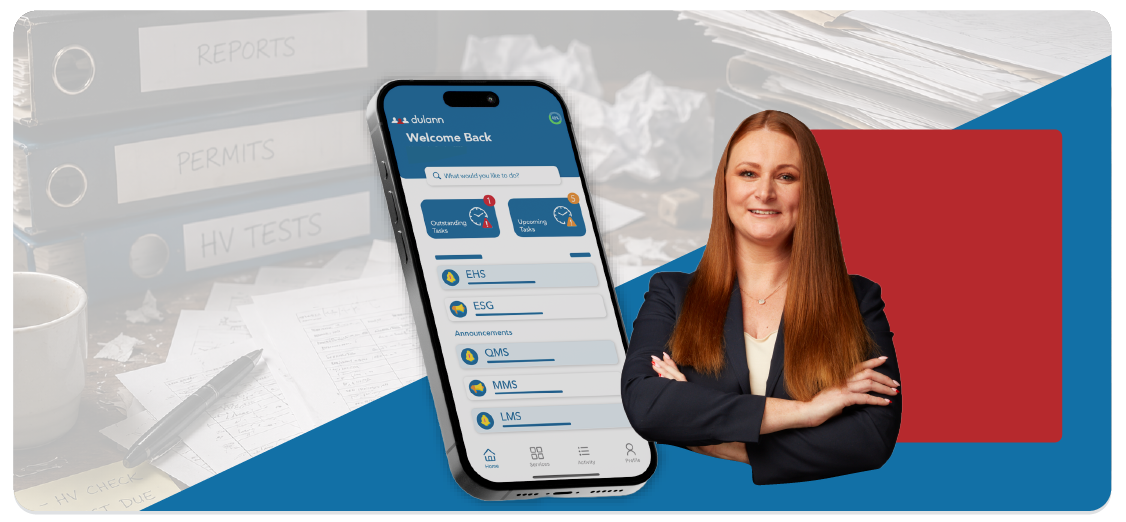
How dulann approaches this
In dulann, the focus is not just on making safety faster.
It’s on making it effective at the point of risk.
That means:
- Structured processes that require real engagement.
- Systems that maintain visibility and accountability.
- Workflows that support understanding, not just completion.
The goal isn’t frictionless safety.
It’s controlled, usable, real-world safety.

The bottom line
Making safety easier is important.
But making it too easy creates a different problem.
One where processes are completed…
But risks are not reduced.
Question for safety leaders:
Where is the line in your organisation between making safety easier and making it meaningful?
If you're exploring how to reduce friction without weakening safety outcomes, we regularly share practical insights from the organisations we work with.