Most organisations complete corrective actions.
They log them.
Assign them.
Mark them as done.
On paper, it looks like progress.
But there’s a gap that quietly undermines everything.
Completion does not equal risk reduction.
The illusion of progress
It’s easy to believe that once an action is completed, the problem is solved.
A task has been done.
A box has been ticked.
The system moves forward.
But risk doesn’t reduce because something was completed.
It reduces when something has been proven to work.
Completed vs. Verified Closure
Most organisations stop at completion.
High-performing organisations go further.
They move to verified closure.
An action is completed when:
- The task has been carried out.
An action is only truly closed when:
- It has been implemented to the required standard.
- Evidence confirms it has been done properly.
- The outcome has been verified.
- The risk has demonstrably been reduced.
That is the difference.
Completed = activity
Verified closure = prevention
Where learning actually breaks
Corrective actions are supposed to prevent recurrence.
But when organisations stop at completion:
- The same risks reappear.
- Issues repeat across sites.
- Controls degrade over time.
Because the most important question is never answered:
Did this actually work?
Most organisations don’t have an action problem
They have a closure problem.
Actions are raised.
Work gets done.
But the step that proves effectiveness is often skipped.
That’s where learning should happen.
And that’s where it often stops.

Why this matters more than it seems
When actions are completed but not properly closed:
- Reporting loses credibility.
- Follow-through weakens.
- Risks become normalised.
The system still looks active.
But it’s no longer effective.
The role of digital systems
Many systems are designed to track actions.
Fewer are designed to ensure they are properly closed.
A strong system should:
- Clearly distinguish between completed and closed.
- Require evidence before closure.
- Maintain visibility of open risk.
- Link actions back to the original issue.
- Ensure accountability through to final verification.
Not to create more admin.
But to ensure the loop is actually closed.
How dulann approaches this
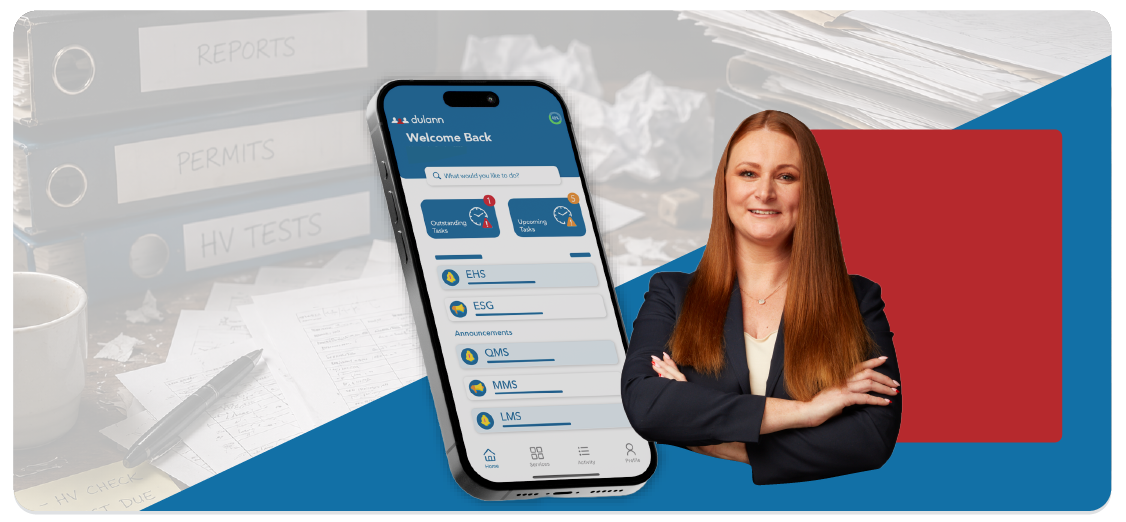
In dulann, corrective actions don’t stop at completion.
They move through to verified closure.
Closure is not a status.
It’s a standard.
Actions are only closed when:
- They meet the required standard.
- Evidence has been captured.
- Effectiveness has been confirmed.
- The original risk has been addressed.
So organisations don’t just complete actions.
They prove they worked.
Because that’s what reduces risk.
The bottom line
Completed corrective actions create activity.
Verified closure creates learning.
And without verified closure, organisations don’t reduce risk.
They just move on from it.
Question for safety leaders:
How confident are you that your “completed” corrective actions have actually reduced risk?
If you're looking at how to move from activity to real risk reduction, we regularly share practical insights from the organisations we work with.
Looking to cut workload and gain better visibility across EHSQ? Book a discovery call here.