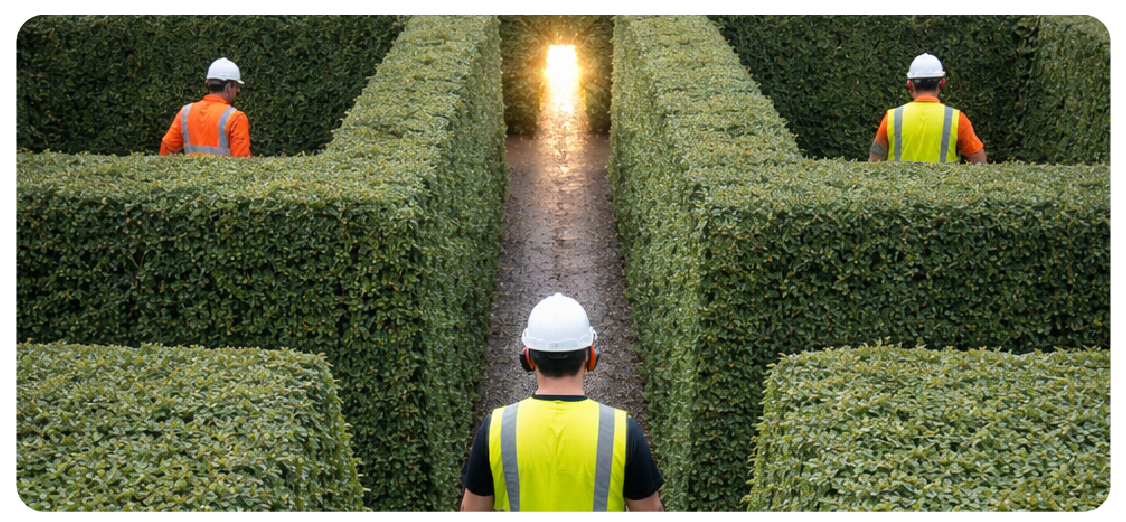
“Human error” still dominates incident reports. “Human Error” Is Overused, and EHSQ Leaders Know It.
It is quick, familiar, and rarely challenged. Unfortunately it is also where learning often stops.
Yes, people make mistakes. Any serious safety professional accepts that. But decades of evidence, from James Reason’s Swiss Cheese Model through to modern frameworks like HFACS, they all show the same thing:
Human error is usually the final act, not the root cause.
When incidents are analysed properly, organisational and system conditions consistently sit upstream of frontline actions.
Why the Label Persists?
Human error remains popular because it is:
- Easy to document
- Hard to dispute
- Convenient for closing investigations
- Comfortable for leadership and most of all
- Attempts to shift liability from the organisation in the event of a legal challenge or investigation
UK HSE guidance has repeatedly warned against stopping investigations at individual behaviour, yet the habit persists across industries.
Systems Don’t Remove Accountability, They Expose It
Well designed systems make safe work the default. Poorly designed systems rely on vigilance, memory, and rule following under pressure, then blame people when that inevitably fails.
Critics argue that systems thinking makes it easier for people to follow. That only happens however when the systems are understood. Digital EHSQ Systems streamline and automate processes, as well as allowing people to access live data quicker. That's a simple fact.
The Question That Changes Outcomes
Instead of asking: “Why did they break the rules?”, high performing forward thinking organisations ask…“What made their decision make sense at the time?”
That single shift separates learning organisations from compliant ones.

A Position That Actually Holds Up
A defensible, evidence based stance is this:
- Most incidents involve human actions
- Those actions are shaped by system conditions
- System level change delivers more sustainable risk reduction than behavioural fixes alone
This is not theory. It is how high reliability industries operate.
Across major incident datasets, human actions are cited in the majority of events. Some suggest that this can be as much as 70–90% of incidents. Yet deeper analysis using frameworks such as HFACS, consistently shows that organisational and supervisory factors dominate as contributing causes. In other words, people are involved, but systems decide the odds. Organisations that focus only on correcting behaviour see limited gains; those that redesign work, remove pressure, and strengthen controls achieve sustained risk reduction. The data is clear: if safety performance is not improving, the problem is unlikely to be the workforce, it is the system they are being asked to work within.
A Challenge to EHSQ Leaders
If your investigations still end with “human error”, you may be closing cases, not reducing risk.
At dulann, we believe safety improves when organisations stop asking who failed and start asking what the system allowed.
That is where real control begins.